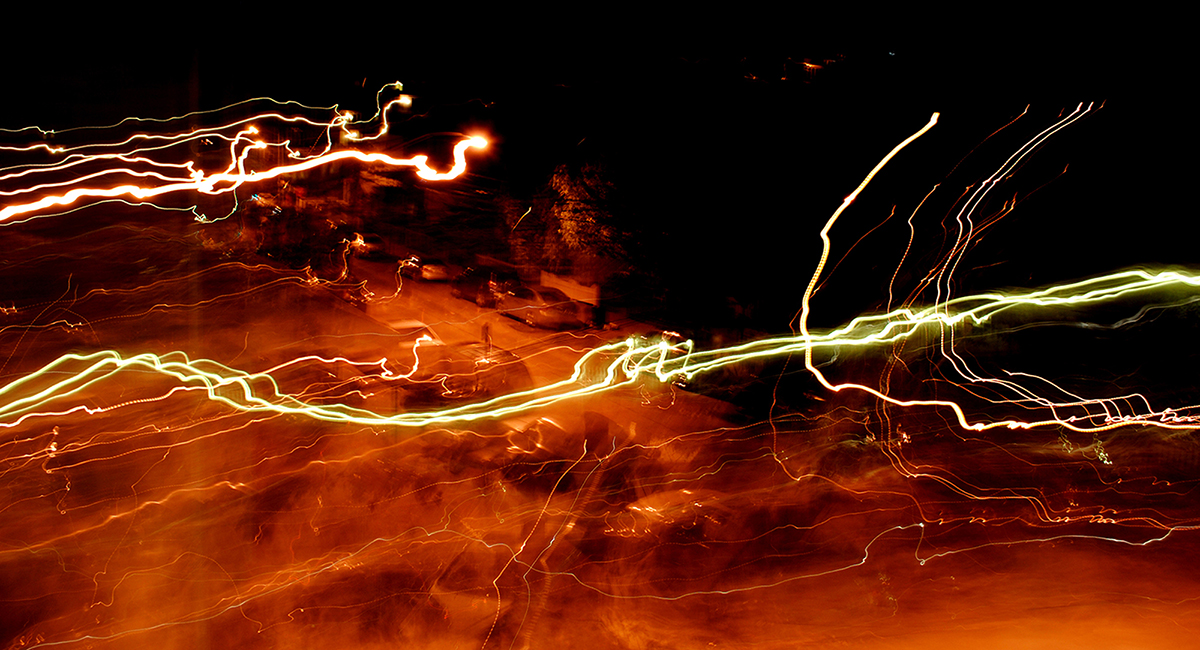
The whole of objective reality can never be fully measured, perceived, or understood by any single person at any specific moment in time. Reality is too vast, too layered, and too dynamic to be grasped all at once. What we experience is always a fraction — an angle, a moment, a frame. Yet from these fragments we are still able to construct something meaningfully accurate. We rely on approximation. We take scattered pieces of input and slice them together, with the hope that the final product resembles the truth closely enough to navigate it.
A simple example is how movies are made. A film is not one continuous stream of reality. It is a rapid sequence of still images captured frame by frame, stitched together at a fixed rate and paired with audio that was recorded separately. When synchronized, the brain interprets these fragments as a seamless moving world. We do not notice the gaps between frames, nor do we hear the independent nature of the soundtrack. We experience a coherent whole because our minds supply the continuity the raw data lacks.
The same process is happening inside our heads every day. Our senses offer only thin slices of information—light on the retina, vibrations in the ear, pressure on the skin. None of these are complete pictures of the world. Yet our brain compiles them, organizes them, and fills in missing details to construct a working model of reality. We do not experience every millisecond or every viewpoint, but the mind acts as an editor, stitching a continuous narrative from discrete sensory flashes.
Consider something even more familiar: walking through a house. You cannot stand in every room simultaneously. At any given second, your senses only register the space you occupy. But you still understand that the rest of the house exists. You remember the rooms you left behind, and you trust that rooms you have not yet seen are still waiting around the corner. You carry a mental blueprint not only of what you have experienced, but of what you logically infer must be true.
This is how humans interact with the world. We rely on memory, inference, prediction, and imagination to bind scattered data into a functional model of objective reality. We do not need omniscience to navigate life effectively. We simply need enough pieces, arranged in the right order, to reveal a picture that is close to the truth — close enough to walk forward without falling into the dark.